

The Third-Largest Source of Delaware's Revenue Isn't a Tax

Updated: Jul 29

Next Meeting Change of Location: See you Monday, August 3, at our next 38th District and Southern Delaware Republican Club at the Ocean View Town Hall, 32 West Avenue, Ocean View, 6:30pm.
Also, plan on Door Knocking with our Candidates Sunday, August 9th, 1pm, with Carlie Carey, Dr. Mike Katz, Rep. Ron Gray, Senator Gerald Hocker. We need YOUR help to make this successful! Email here is you can make it: info@38thdrcp.com.
Most Delawareans know the state collects personal income taxes and corporate franchise taxes. But few realize that one of Delaware's largest sources of revenue isn't a tax at all. It's unclaimed property, better known by its legal name, escheat.
Every year, hundreds of millions of dollars from forgotten bank accounts, uncashed paychecks, insurance proceeds, stock dividends, utility deposits, and other abandoned property flow into Delaware's treasury. It has become the state's third largest General Fund revenue source, helping pay for everything from education to public safety. Yet outside of accountants, lawyers, and state budget officials, few Delawareans have ever heard of it.
That raises an obvious question: How did a small state become so dependent on other people's forgotten money?
The answer begins with Delaware's unique role as America's corporate home. For decades, Delaware has been the preferred state of incorporation for businesses across the country. Millions of corporations, LLCs, and other business entities are legally organized here, even though they may operate somewhere else. Under long-established legal rules governing unclaimed property, abandoned funds generally belong to the owner's home state if the owner's last known address can be identified. But when no valid address exists, the property typically belongs to the company's state of incorporation.
Because so many companies are incorporated in Delaware, our state receives an unusually large amount of unclaimed property from businesses operating throughout the United States.
Unclaimed property is much broader than many people realize. It includes forgotten savings accounts and uncashed payroll checks, but it also includes insurance proceeds, utility deposits, dormant investment accounts, store credits, and accounting credits sitting on a company's books. Imagine a manufacturer cancels an order and issues a credit to another business. If that credit is never claimed because of an accounting error or administrative oversight, it may eventually become unclaimed property. After several years of inactivity, the company is required by law to transfer those funds to the state for safekeeping. Importantly, the rightful owner never loses the right to claim the money. If the owner or heirs later come forward, Delaware must return it.
The system itself isn't particularly controversial. Most people agree that states should protect abandoned property until it can be reunited with its owner.
What has become controversial is how important this money has become to Delaware's budget.
Delaware's modern unclaimed-property program rests on a series of U.S. Supreme Court decisions establishing which state has the right to take custody of abandoned intangible property. The key rule gives the owner's home state the first claim. But when no valid owner address exists, the right generally passes to the company's state of incorporation. Because Delaware is the legal home of millions of corporations, those decisions transformed unclaimed property into one of the state's largest recurring revenue sources. The Supreme Court reaffirmed this principle in Delaware v. New York (1993), a major victory that protected Delaware's ability to collect unclaimed property connected to companies incorporated here.
Beginning in the early 2000s, Delaware significantly expanded its unclaimed-property audit program. Because the State had only a small staff dedicated to administering the program, it relied heavily on private contract audit firms—including Kelmar Associates—to conduct audits of businesses. Those firms were compensated, at least in part, based on the amount of unclaimed property they identified, a practice critics argued created financial incentives for aggressive enforcement.
Those concerns came to a head in the landmark 2016 federal case, Temple-Inland Inc. v. Cook. The court found that several aspects of Delaware's audit practices—including lengthy look-back periods, estimation methods, and the retroactive application of certain policies—violated the company's right to substantive due process. In a strongly worded opinion, the court concluded that the cumulative effect of those practices "shocks the conscience." Delaware subsequently enacted significant reforms to its unclaimed-property law in 2017.
Although Delaware substantially revised its audit practices after the Temple-Inland decision, one thing has not changed: unclaimed property remains one of the state's largest sources of revenue. And because so much money is at stake, it continues to play an important role in Delaware's annual budget discussions.
According to the June 2026 forecast from the Delaware Economic and Financial Advisory Council (DEFAC), the state expects to receive approximately $554 million in gross unclaimed-property collections in Fiscal Year 2027, with essentially the same amount projected through Fiscal Year 2028.
Yet Governor Matt Meyer's Recommended Budget proposed something different. As part of the FY2027 budget package, the Office of Management and Budget proposed raising the statutory cap on unclaimed-property revenue available for spending from $554 million to $614 million, providing an additional $60 million to help balance the state budget.
That distinction is important. DEFAC estimates what the state is expected to collect. The Governor's budget proposes how much of that revenue should be available to spend. Those are related questions, but they are not the same thing.
The larger concern, however, isn't whether the number is $554 million or $614 million.
It is that Delaware has become increasingly dependent on a revenue source that exists because of a series of court decisions and legal rules. If Congress changed the law, if the U.S. Supreme Court revisited the priority rules governing unclaimed property, or if more companies kept better owner records, Delaware's unclaimed-property revenue could change dramatically.
In other words, Delaware is relying on a revenue stream that is not guaranteed forever.
That is why fiscal conservatives argue Delaware doesn't have an income problem—it has a spending problem.
When one of the state's largest revenue sources depends on legal doctrines, corporate behavior, and unclaimed private property, increasing recurring government spending becomes risky. If that revenue declines in the future, lawmakers will face difficult choices: reduce spending, raise taxes, increase fees, or search for yet another temporary source of money.
Supporters argue Delaware has responsibly managed the unclaimed-property program for decades while continuing to honor claims from rightful owners. Critics counter that the state should not build permanent spending commitments around a revenue source that could change through future court decisions, federal legislation, or shifts in corporate practices.
Delaware's unclaimed-property system serves a legitimate purpose—protecting forgotten property until its rightful owner comes forward. But the larger policy question remains:
Should one of Delaware's largest sources of government revenue depend on money that was never intended to finance government in the first place?
That is a debate every Delaware taxpayer should understand.
If you're curious whether the state is holding any forgotten money that belongs to you or a family member, you can search Delaware's unclaimed-property database at unclaimedproperty.delaware.gov or the national database at MissingMoney.com. You might be surprised by what you find.
Email us here at info@38thdrcp.com.
***
Dr. Mike Katz for U.S. Senate and Earl Cooper for U.S. Congress are the only candidates who can beat Chris Coons and Sarah McBride—but first, they need your vote in the Republican Primary. Vote early September 2–13, or vote on Primary Election Day, September 15. Delaware is ready for a new direction.
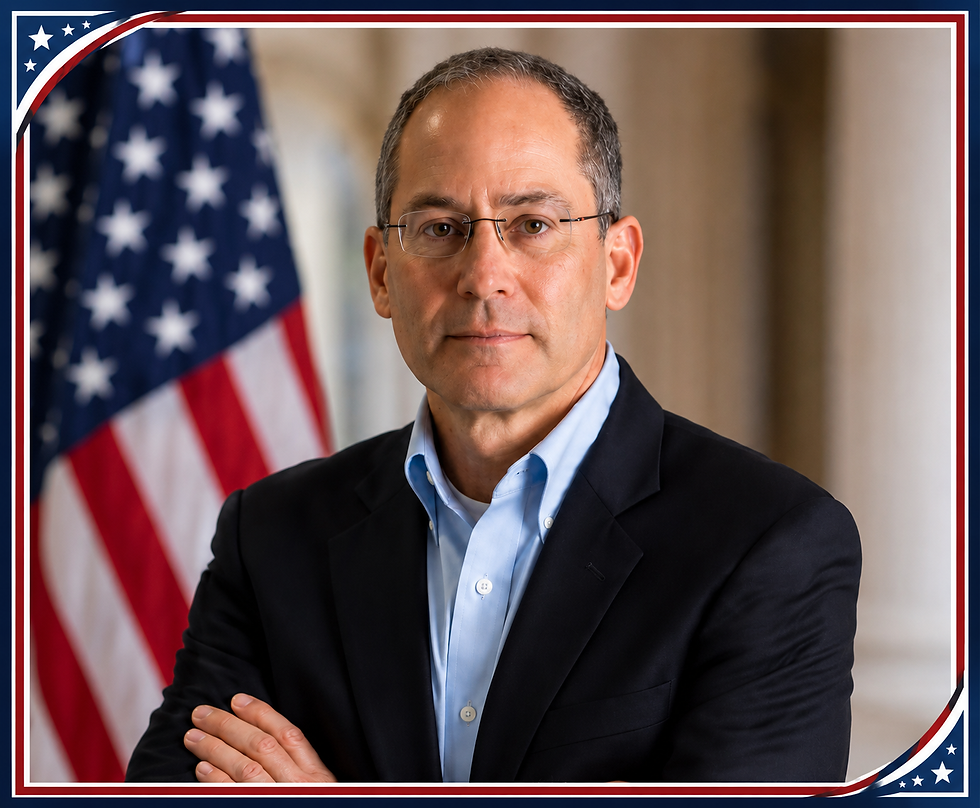
Dr. Mike Katz is a pediatric anesthesiologist, former Delaware State Senator, and small business owner. He has spent his career caring for Delaware families and serving his community. He's running to bring common-sense leadership, fiscal responsibility, secure borders, and government that puts people before politics. Please vote for Dr. Mike Katz in the Republican Primary on September 15.

Rev. Earl Cooper is a pastor, small business owner, and community leader who has spent decades serving Delaware families. Through his work creating jobs, restoring neighborhoods, and expanding opportunities for homeownership and workforce training, he has dedicated his life to strengthening communities. He's running for Congress to bring faith, integrity, and common-sense leadership to Washington. He needs your vote in the Republican Primary on September 15.
See you Monday, August 3, at our next 38th District and Southern Delaware Republican Club at the Ocean View Town Hall, 201 Central Avenue, Ocean View, 6:30pm.
Guest Speaker: Jane Brady and where we stand now with Offshore Wind.
***
If you like what we do and would like to help support our mission, please send us a donation. We thank you for choosing to keep the 38th District Republican Club a success and a beaming light of conservative values in Delaware!

Like our logo? Buy a t-shirt or hat here!
*************************************************************************
Do you want to get more involved locally? The 38th District includes Bethany Beach, South Bethany, Fenwick Island, Ocean View, Millville, Selbyville and Frankford. YOU can make a difference! Email info@38thdrcp.com for more information. Also, sign up for the State GOP e-Newsletters here.
Listen to WGMD 92.7 and 98.5 for local news!
*******************************************************
Join the GOP:
Good Ordinary People who have common sense and will put an end to the nonsense!
Join the 38th District Republican Club and Subscribe to our e-Newsletter. If you like what we do and stand for, consider sending us your financial support.
To Donate Make check payable to:
38th DRCP
PO Box 184
Frankford, DE 19945
We meet the first Monday of the month, excluding holidays. For questions please
Email: info@38thdrcp.com
Upcoming Meetings
38th Club Meeting, Monday, First Monday, 6:30pm, South Coastal Library, Bethany Beach
July 38th Club Meeting CANCELLED July
IRSD Committee Meetings, Second Monday of each month, Millsboro Middle, 4pm-7pm
IRSD School Board Meetings, Fourth Monday of each month, 6:30pm, Millsboro Middle
We welcome your support as we support conservative values and responsible government.

This newsletter is intended for informational purposes only. The content provided is for general information and entertainment purposes, and should not be construed as professional advice. The views and opinions expressed in this newsletter are those of the authors and do not necessarily reflect the official policy or position of the Club. Readers are encouraged to seek professional guidance or conduct their own research when making decisions based on the information provided in this newsletter. The Club does not guarantee the accuracy, completeness, or usefulness of any information presented in this newsletter and will not be held liable for any errors or omissions. Website paid for by the 38th District Republican Club PAC and not authorized by any candidate or candidate’s committee.



Comments